
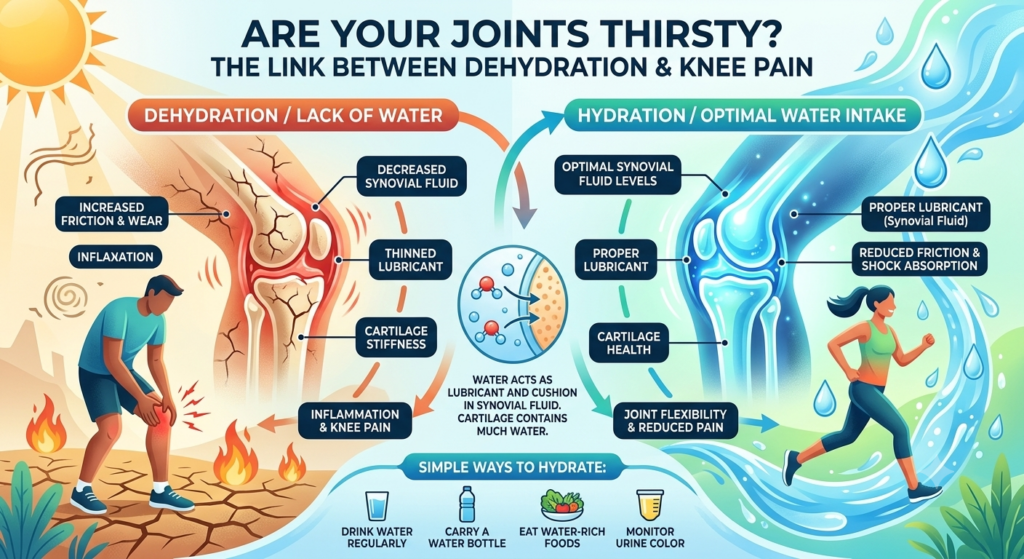
When a sudden ache develops in your knee or your lower back begins to throb, it is easy to assume the worst. We immediately look for complex medical reasons, blaming old sports injuries, arthritis, or a bad mattress. However, one of the most common and overlooked causes of chronic musculoskeletal discomfort is completely preventable: a simple lack of water.
If you aren’t drinking enough fluids throughout the day, you aren’t just giving yourself a headache-you are actively depriving your joints of the lubrication they need to function. The link between dehydration joint pain and chronic stiffness is a massive biological reality for millions of adults.
Before you spend time and money searching for a complicated medical diagnosis, you might just need to ask yourself: Are my joints thirsty? Here is the fascinating science behind dehydration joint pain and how you can restore your body’s natural shock absorbers.
The Science: How Does Dehydration Joint Pain Happen?
To understand why a lack of water makes your knees ache, you have to look at the anatomy of your joints. Where two bones meet, they are protected by a layer of smooth cartilage.
-
The “Sponge” Effect: Your cartilage is comprised of roughly 70% to 80% water. Think of cartilage like a household sponge. When a sponge is fully saturated with water, it is plump, soft, and highly resilient-it bounces right back when you squeeze it. When that sponge dries out, it becomes brittle, stiff, and easily damaged. When you are dehydrated, your body pulls water away from your cartilage to supply your vital organs, leaving your joints “dry” and unable to absorb the physical shock of walking or running.
-
Thickened Synovial Fluid: Your joints are encased in synovial fluid, a liquid that acts like motor oil to reduce friction. Hydration keeps this fluid thin and slick. Dehydration causes this fluid to thicken into a sluggish gel, drastically increasing friction and causing that familiar, painful grinding sensation in your knees.
-
Toxin Buildup: Water flushes cellular waste and toxins (like uric acid) out of your body. When you are dehydrated, these inflammatory toxins pool inside the joint capsule, triggering severe swelling and pain.
3 Signs Your Knee Pain is Linked to Dehydration
How do you know if your discomfort is structural or simply a lack of water? Look for these three signs of dehydration joint pain:
-
Severe Morning Stiffness: You lose a lot of water through respiration while you sleep. If your knees and back feel incredibly stiff for the first hour after you wake up, but slowly loosen up as the day goes on, dehydration is a likely culprit.
-
Crepitus (Popping and Cracking): If your knees constantly sound like bubble wrap when you climb the stairs, it is often a sign that your synovial fluid is too thick and your cartilage is dry.
-
Muscle Cramping: Water doesn’t just lubricate bones; it carries essential electrolytes to your muscles. If your knee pain is accompanied by sudden, sharp calf or thigh cramps, your body is begging for fluids.
How to Rehydrate Your Joints: An Inside-Out Approach
Curing dehydration joint pain requires more than just chugging a glass of water when you feel thirsty. You need a proactive daily routine to rebuild your cartilage and soothe the friction-based inflammation that has already occurred.
The Inside: Hydrate and Fuel with UNI Multivitamin
Rehydrating your joints takes time. To maximize your cellular hydration, you should drink a large, 16-ounce glass of water the moment you wake up.
However, water alone isn’t enough to repair the cartilage that has been worn down by dry friction. Pair your morning water with the Ridomaxx UNI Multivitamin. This complete nutritional formula provides the essential Vitamin C (crucial for natural collagen production) and bone-strengthening minerals your body needs to rebuild resilient, healthy cartilage. Taking it daily ensures your joints have the foundational nutrients required to act as perfect shock absorbers.
The Outside: Fast Friction Relief with Ortho Oil
While your morning hydration routine works to slowly rebuild your synovial fluid from the inside, you still need a way to stop the throbbing in your knees right now.
To immediately combat the inflammation caused by dehydration joint pain, reach for the Ridomaxx Ortho Oil. Formulated with deeply nourishing Sesame oil (which provides incredible external hydration to the tissues) and warming Gaultheria (Wintergreen) extract, this Ayurvedic remedy is the ultimate friction-fighter. Massaging a few drops into your dry, aching knees instantly dilates blood vessels, flushing the joint with fresh circulation and physically melting away the stiff, gel-like tension in minutes.
Drink Up and Keep Moving
Your joints work incredibly hard to support your body weight every single day-the least you can do is give them the hydration they need to thrive. By drinking plenty of water, fueling your cells with complete nutrition, and keeping a targeted relief oil on hand, you can wash away joint pain for good.