
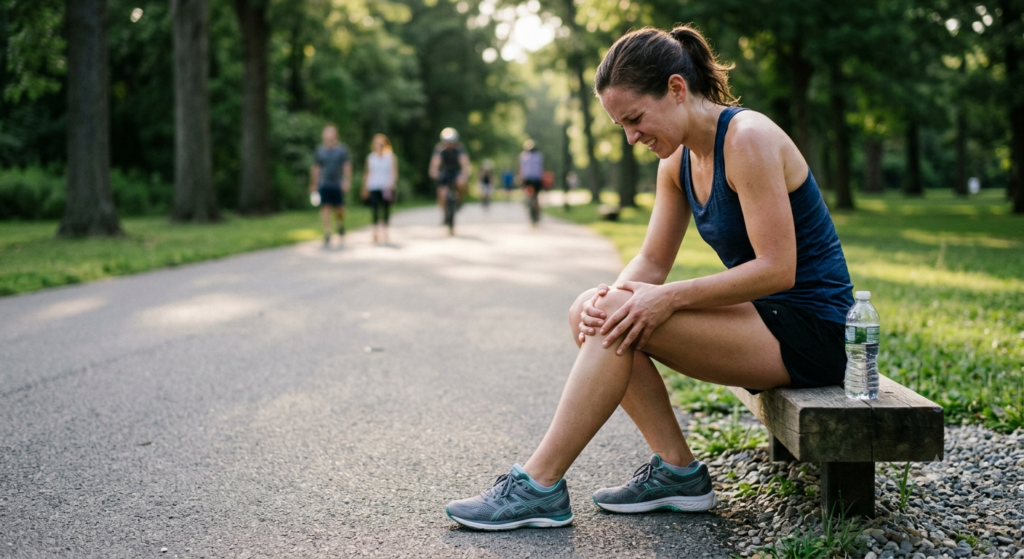
If you have ever hit your perfect stride on a great jog only to be sidelined the next day by stiff, aching joints, you know exactly how frustrating knee pain after running can be. Whether you are actively training for a marathon or just jogging a few miles a week for weight loss, dealing with a throbbing ache beneath your kneecap is one of the most common hurdles for athletes of all levels.
Often referred to as “runner’s knee,” this specific type of joint discomfort can completely derail your fitness goals if left ignored. Fortunately, you do not have to hang up your running shoes for good.
By understanding the biomechanics of your stride and upgrading your post-workout routine, you can bounce back quickly. Here is your ultimate guide to understanding why you experience knee pain after running, how to recover faster, and how to prevent future injuries.
What Causes Severe Knee Pain After Running?
To stop the ache, you first need to understand the impact forces your body goes through on the pavement. Every time your foot strikes the ground, your knee absorbs a shock equivalent to three times your body weight. If your body isn’t perfectly aligned, that force takes a severe toll on your cartilage.
Here are the top three reasons you might be experiencing knee pain after running:
-
Weak Glutes and Hips: Your glutes and hip muscles are supposed to stabilize your legs. If they are weak from sitting at a desk all day, your kneecap can drift out of alignment as you run, rubbing painfully against your thigh bone.
-
A Tight IT Band: The Iliotibial (IT) band runs down the outside of your thigh. When it becomes tight from repetitive running, it pulls on the knee joint, causing sharp, localized inflammation on the outside of the knee.
-
Improper Footwear: Running in worn-out shoes or running on hard asphalt instead of softer trails drastically increases the mechanical shock your joints have to absorb.
3 Steps to Recover From Knee Pain After Running
When you wake up sore, pushing through the pain is the worst thing you can do. Follow these active recovery steps to heal the micro-tears in your tissues and get back on the road.
1. Practice Active Rest
The immediate cure for knee pain after running is to take a break from high-impact pounding. However, you shouldn’t just sit still. Engage in “active rest” by doing low-impact cardio, such as swimming or cycling. This keeps your cardiovascular fitness high and pumps fresh, oxygenated blood to your knee to speed up tissue repair without putting weight on the joint.
2. Stretch the Surrounding Muscles
Since tight leg muscles pull your kneecap out of place, stretching is mandatory for long-term recovery. Focus on stretching your hamstrings, quads, and calves. Use a foam roller on the outside of your thigh to release tension in your IT band, which instantly relieves the pressure on the side of your knee.
3. Use Targeted Ayurvedic Massage for Fast Relief
Ice packs are great for the first 24 hours, but to truly accelerate your recovery and eliminate stiffness, you need to increase local blood circulation. Massaging a targeted, anti-inflammatory oil into the knee joint is the fastest way to soothe the tissues and relax the surrounding muscles.
The Ridomaxx Solution: You don’t have to wait days for the swelling to go down. Keep a bottle of Ridomaxx Ortho Oil in your gym bag as your ultimate post-run recovery tool.
Formulated with powerful Ayurvedic botanicals, Ridomaxx Ortho Oil is designed to fight localized inflammation immediately. Massaging this oil into your knees and calves right after a run allows the warming Gaultheria (Wintergreen) oil to stimulate fresh blood flow, while the natural Ginger extract actively suppresses inflammatory chemicals. It provides deep, soothing heat that relaxes tight tendons, drastically reducing the severity of your knee pain after running.
Prevent Injury by Fueling Your Body Inside and Out
For runners, true injury prevention requires a 360-degree approach. While Ridomaxx Ortho Oil provides rapid external recovery for your muscles and joints, you must also support your cartilage from the inside out.
Adding the Ridomaxx UNI Multivitamin to your daily routine ensures your body has the Vitamin D, Calcium, and antioxidants it needs to rebuild dense bones and fight the oxidative stress caused by intense cardio.