
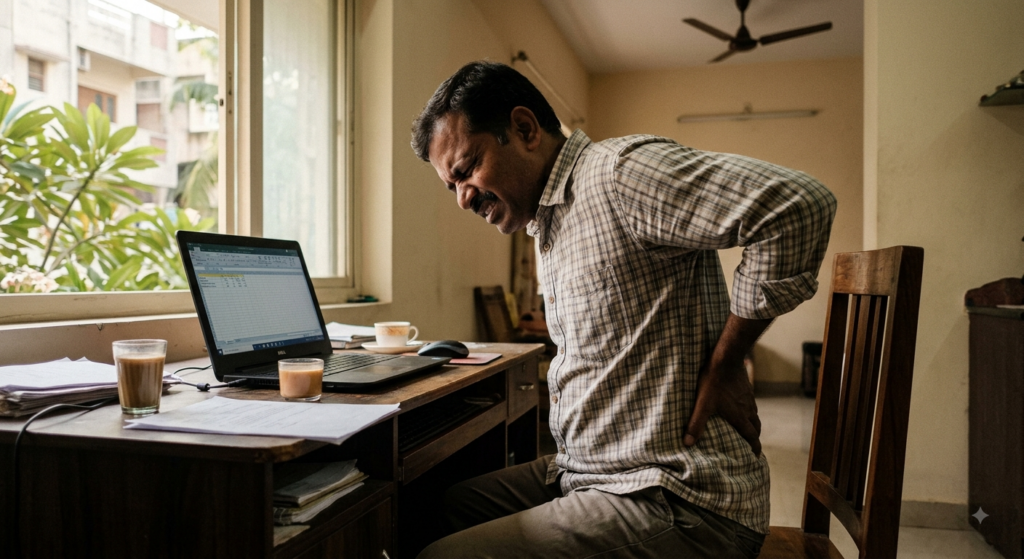
Whether you are working from a high-rise office or your kitchen table, the modern workday requires us to spend a lot of time in a chair. While working from a desk might seem physically harmless, millions of professionals suffer from severe lower back pain from sitting for eight or more hours a day.
If you frequently log off from your computer feeling stiff, achy, and completely drained, your workspace is taking a hidden toll on your body. The human spine was designed for dynamic movement, not for remaining locked in a static, seated position during back-to-back Zoom calls.
You do not have to accept daily discomfort as just another part of your job. By understanding the biomechanics of seated posture and upgrading your desk routine, you can protect your spine. Here is exactly why you experience lower back pain from sitting and how you can fix your desk posture today.
The Science: Why Does Sitting Hurt Your Back?
Sitting might feel like resting, but it actually places more pressure on your spine than standing does. When you sit down, several biological changes happen simultaneously that create a perfect storm for back pain:
-
Shortened Hip Flexors: When you are seated, your hips are bent at a 90-degree angle. Over the course of a long workday, the muscles at the front of your hips (the hip flexors) become tight and severely shortened. When you finally stand up, these tight muscles pull your pelvis forward, creating a painful, unnatural arch in your lower back.
-
Lumbar Compression: Slouching forward to look at a laptop screen forces your spine into a “C-shape.” This posture compresses the delicate discs in your lower lumbar spine, cutting off the circulation of nutrients and causing the surrounding muscles to spasm as they struggle to hold your body weight.
-
Glute Amnesia: When you sit, your glute muscles essentially turn off. Because these muscles are supposed to stabilize your lower back, their inactivity forces your fragile lower back muscles to work overtime.
3 Ways to Fix Your Desk Posture
You can eliminate the majority of your workday discomfort by making a few simple adjustments to your environment and your habits.
1. Optimize Your Ergonomics
If you are dealing with lower back pain from sitting, the first thing to check is your chair and monitor height. Your feet should be completely flat on the floor with your knees at a 90-degree angle. If your chair doesn’t have built-in lumbar support, roll up a small towel and place it exactly at the curve of your lower back to prevent yourself from slouching. Finally, raise your monitor so the top third of the screen is directly at eye level.
2. Set a 30-Minute Movement Alarm
Repetitive strain happens when you lock your body into one position for too long. Set a recurring timer on your phone or computer. Every 30 minutes, stand up for exactly 60 seconds. You don’t have to leave your desk—just stand up, stretch your arms overhead, and gently twist your torso. This briefly restores blood flow to your compressed spinal discs.
3. Do Gentle Seated Stretches
You can release muscle tension without ever leaving your chair. Try the “Seated Figure Four” stretch: While sitting, cross your right ankle over your left knee (making a ‘4’ shape with your legs). Gently lean forward until you feel a deep stretch in your right hip and glute. Hold for 20 seconds and switch sides. This specifically targets the tightness causing your lower back pain.
The Ridomaxx Solution for Desk Workers
Even with the perfect ergonomic chair, a long workday will inevitably drain your energy and fatigue your muscles. To conquer the workweek, you need an inside-out wellness routine that targets both your mental fatigue and your physical tension.
The Outside: Instant Relief with the Ortho Oil Roll-On
When you are on a tight deadline and a back spasm hits, you need immediate relief. Traditional pain creams are greasy, which means you cannot use them without ruining your keyboard or phone screen.
The Ridomaxx Ortho Oil Roll-On is the ultimate desk companion. This pocket-sized, mess-free applicator allows you to roll therapeutic Ayurvedic oils directly onto your tight lower back or knotted shoulders. The warming Gaultheria (Wintergreen) and soothing Ginger oil instantly increase local blood flow, melting away the tension while keeping your hands completely clean so you can keep working.
The Inside: Beat the Afternoon Slump with UNI Multivitamin
Dealing with lower back pain from sitting is exhausting, and by 3:00 PM, most desk workers hit a severe energy slump. Instead of reaching for a sugary coffee that will cause a crash later, fuel your body with the Ridomaxx UNI Multivitamin. Taking this complete supplement with your morning breakfast ensures your nervous system is loaded with the B-Complex vitamins required for sustained, natural mental energy all day long.
Work Smarter, Not Harder
Do not let your desk job ruin your posture or your evenings. By optimizing your workspace, taking movement breaks, and keeping smart Ridomaxx remedies at your desk, you can clock out feeling just as good as when you clocked in.